
Why Is My Calf's Ear Cold? What Ear Temperature Can Tell You about their Health
By the time you notice a calf looking off-colour, you may already be behind.
As herd animals, calves naturally hide their symptoms when they’re not feeling their best. Visible symptoms of illness often appear only after an infection has already taken hold.
That’s where ear temperature monitoring comes in.
How WellCalf Monitors Ear Temperature
WellCalf’s smart ear tags use infrared sensors to track the surface temperature of each calf’s ear, sending a reading to the systems central gateway device every 15 minutes. This continuous stream of data lets the system track changes and spot patterns long before anything becomes visible to the naked eye.
At just 18 grams, the tags are light enough to go on at birth, so you can monitor your animals from day one, through every stage of growth.
Why the Ear?
When a calf first becomes unwell, their body prioritises keeping core temperature and vital organs warm. To do this, it reduces blood flow to the extremities, including the ears.
This means a calf’s ear temperature can change noticeably before any outward signs of illness appear. Without monitoring, that early warning is invisible.
Likewise, if a calf is struggling with the cold weather, but otherwise healthy, their ears will get cold first as they start using more and more energy to fight off the chill. Think of it as like when a person’s fingers and toes get cold first when you’re trying to keep warm without gloves or socks.
Example from the App
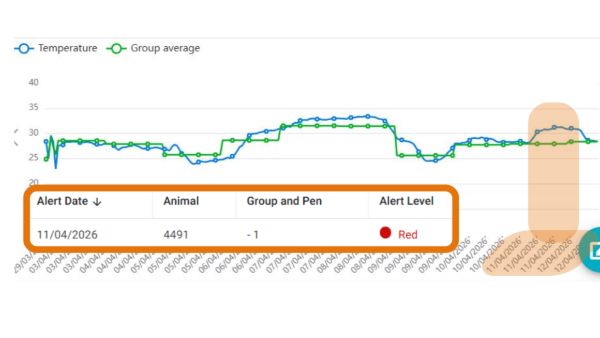
This graph shows real data from the WellCalf app. The blue line show ear temperature readings for the individual animal, and green is the baseline for the whole group. As you can see, the two lines mostly closely track each other – but we’ve highlighted in orange a “blip” dated April 11th.
In this blip, the calf’s ear temperature jumps slightly, getting away from that group average. This change in ear temp, combined with other data in the app triggered a red alert on April 11th.
Earlier Alerts. Better Outcomes.
Smart monitoring with WellCalf doesn’t replace your on-farm team’s eyes: it extends them.
WellCalf monitoring data gives you an extra layer of insight, helping you intervene earlier and more precisely for the animals that need it most.