
How Does a Calf’s Digestive System Work? Rumen Development Explained
Anyone who’s worked with calves is familiar with the weaning process. This is the gradual shift from a liquid milk diet to solid feed over the first three months of a calf’s life.
But what’s actually happening inside the calf during that transition? Understanding the answer can help you make better decisions about feeding, monitoring, and managing calf health throughout the crucial pre-weaning period.
Four Stomachs, But Not All Working at Once
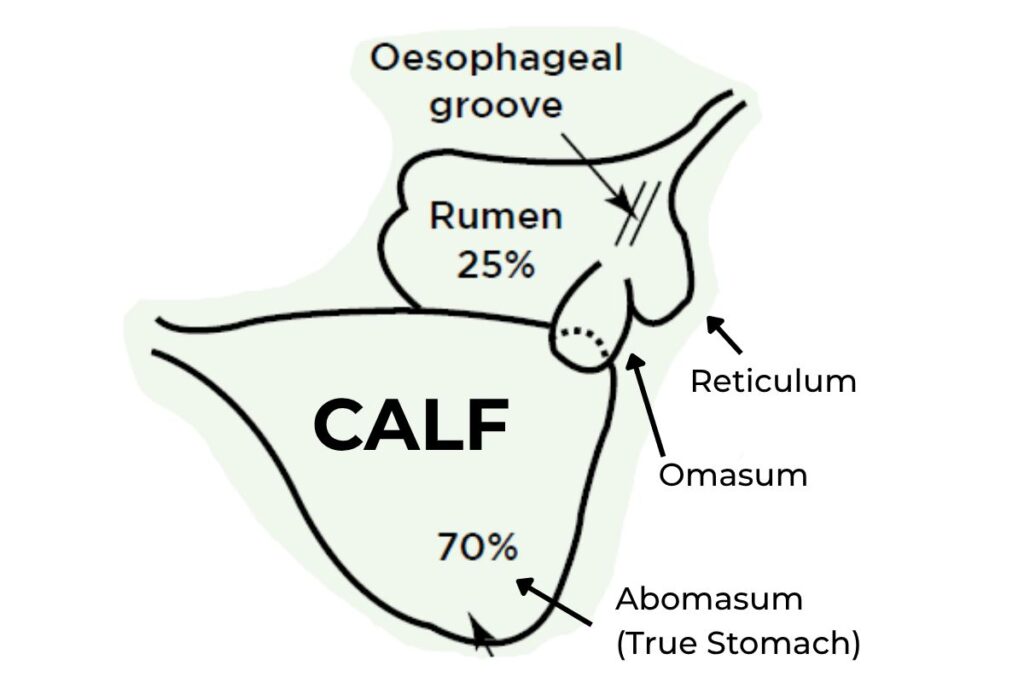
Calves are born with all four of the stomachs they’ll use as adults: the rumen, the reticulum, the omasum, and the abomasum. The key difference from adult cattle is that, in a newborn calf, most of these aren’t fully functional yet.
In a newborn, the abomasum (the fourth, ‘true’ stomach) makes up nearly 70% of the calf’s digestive tract. This is the stomach that digests milk. When a calf suckles, a special muscle at the bottom of their throat called the “oesophageal groove” channels milk directly into the abomasum. This is like a track switcher for a train track, helping milk to bypass the other three stomachs that aren’t developed to process it.
How the Rumen Develops
By around four weeks old, most calves will have some solid feed in their diet. This is where rumen development really begins. Starter concentrate feeds, such as high-protein pellets or coarse, oaty flakes, introduce nutrients that get fermented by gut bacteria developing in the rumen. These beneficial gut bacteria gradually get to work, enabling the calf to digest more and more solid feed, meaning they rely less on milk for their energy.
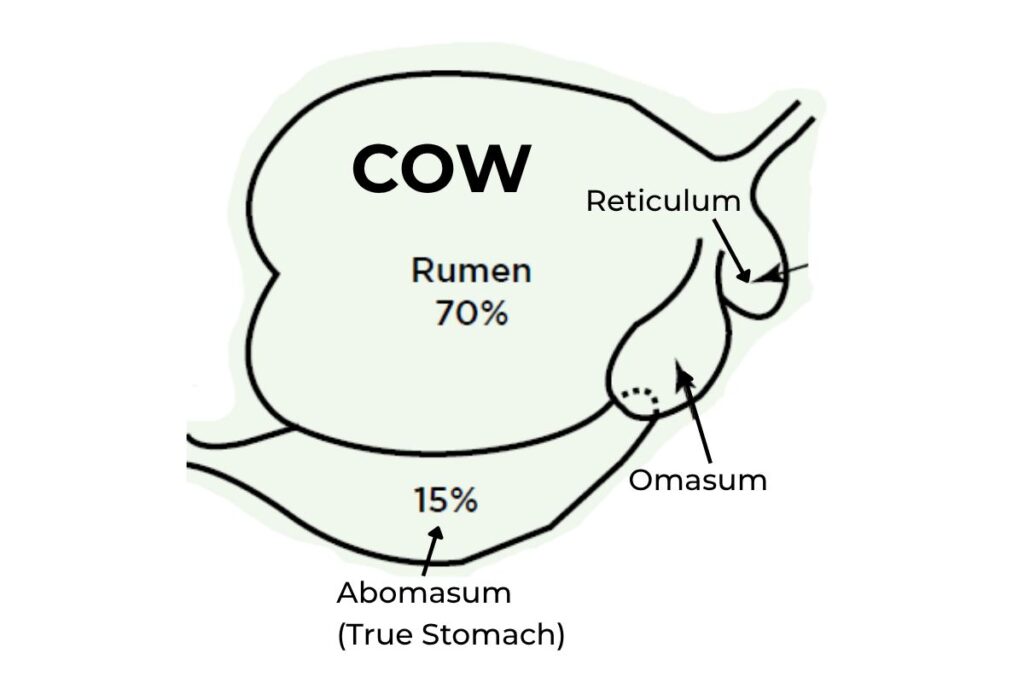
As this happens, the calf’s digestive system experiences significant physical changes. By three months, the abomasum, which started as 70% of the newborn calf’s digestive tract, has shrunk to just 20%. The rumen, which was only 25% at birth, has expanded to account for around 65% of the digestive system. In a fully grown adult cow, the abomasum will shrink even further and will eventually represent just 8% of their total digestive capacity.
In adult cattle, the rumen holds up to 55 gallons of food. That’s about as much liquid as there would be in a bathtub filled up ¾ of the way.
Top Tip Avoid letting calves drink water immediately after a milk feed.
The oesophageal groove (track switcher at the base of the throat) stays open briefly after feeding. While it’s open, water can follow the milk’s route straight through to the abomasum. Water entering the abomasum can weaken the milk clot that forms there. This can affect digestion, meaning the calf is less able to absorb energy and goodness from their milk. This also increases the risk of scours.
Why This Matters for Calf Health
Healthy rumen development in those first few weeks is essential to setting a calf up for lifetime productivity. Disruptions to this process, including bouts of scours or bloat, can interfere with a calf’s nutrient absorption and growth during this critical phase.
Monitoring calf activity and lying time can be a helpful indicator that rumen development is progressing well. A calf that’s suddenly less active, or showing changes to their expected behaviour patterns, may need a closer look. WellCalf’s smart ear tags track activity and monitors for changes around the clock, making issues easier to spot. The mobile app lets your team log weigh-ins, notes, and observations, giving you a complete picture of each animal’s development in one place.
Want to learn how WellCalf supports healthy development in your calves from day one? Get in touch with our team.